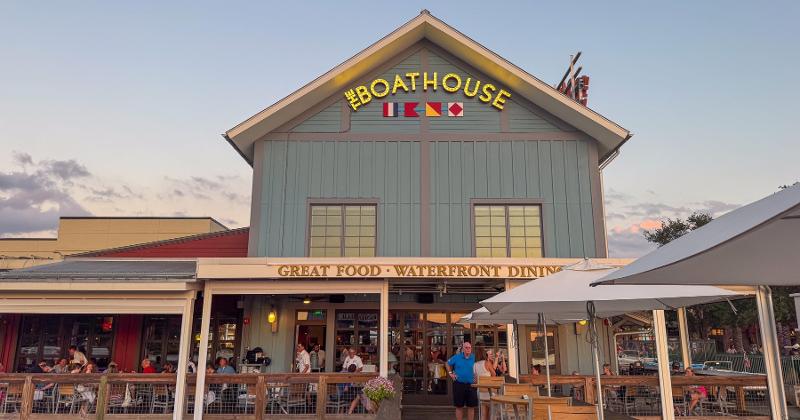
Steven Schussler is a man who understands how to create a dining experience.
This is the man who created vividly experiential concepts like the Rainforest Café (dining in the jungle), T-REX (dining with dinosaurs) and Yak & Yeti (dining at the base of Mt. Everest), all concepts he later sold to Landry’s Inc.
And then there’s The Boathouse at Disney Springs in Orlando, an incredibly high-volume restaurant Schussler created in partnership with Chicago-based Gibsons Restaurant Group.
Here, Schussler exercises his passion for boats.
Perennially in the top five of Restaurant Business’ Top 100 Independent Restaurants, The Boathouse sailed to the No. 2 slot on this year’s list, barely being aced out by the high-end concept MILA in Miami.
Both restaurants achieved just over $51 million in sales last year, though MILA came out slightly ahead. The glamorous celebrity hotspot, which opened in 2020, has an average check of $188 and served 271,461 meals.
The Boathouse, meanwhile, reached that revenue number with an average check of only $51 per person, and the restaurant is 10-years old. About 985,695 meals were served last year at the 440-seat venue, which overlooks a man-made lake.
It’s a tourist spot, sure. That’s Schussler’s specialty. But it’s one that is consistently praised for its food and atmosphere by tourists and locals alike.
Here, the theatrics that Schussler is known for are toned down a bit (there are no animatronics) to a more classy level of kitsch.
There are boats inside the restaurant (one booth is in a gutted motorboat). Outside are 22 antique wooden boats (“floating works of art”). Guests also buzz past the windows in floating Amphicars that drive right into the water (20-minute rides are $125 for three adults).
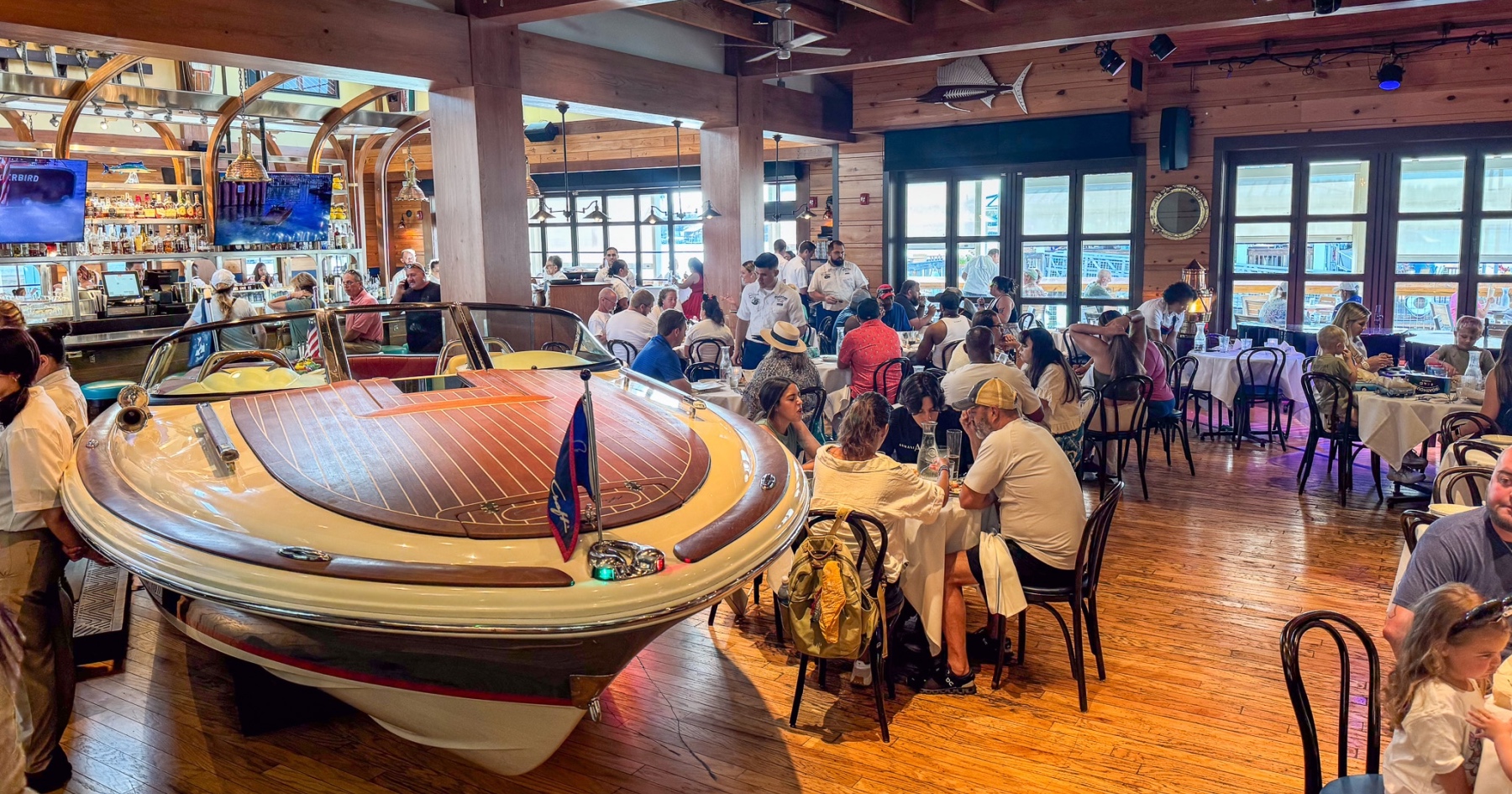
There are boats and everything nautical both inside and out. | Photo by Hailey Williams.
There is all manner of nautical artwork, photos and aphorisms, like: “There are small ships and there are big ships. But the best ships of all are friendships.”
(“That’s trademarked,” notes Schussler. “We’ve trademarked more things than in the history of restaurants.”)
And there are ducks. The gift shop (“The Boatique”) is full of them, from Elvis rubber ducks to T-shirts with sayings like “Quack quack, you duck hater.” The Boatique does about $5 million a year in sales, and duck merch alone generates an estimated $123,000 annually—though that’s not included in the restaurant’s $51 million revenue last year, which only refers to gross food-and-drink sales.
The Boathouse is a well-oiled machine when it comes to turning tables, while also juggling multiple bars (including one on the dock), private events and weddings.
This year, the restaurant expects to serve up nearly 100,000 steaks (about 275 per day); 2 million warm Parker House rolls topped with honey butter; 550,000 oysters (1,500 per day); and 43,000 bright blue Duck Duck Razz cocktails, each served with a tiny rubber duck floating on top.
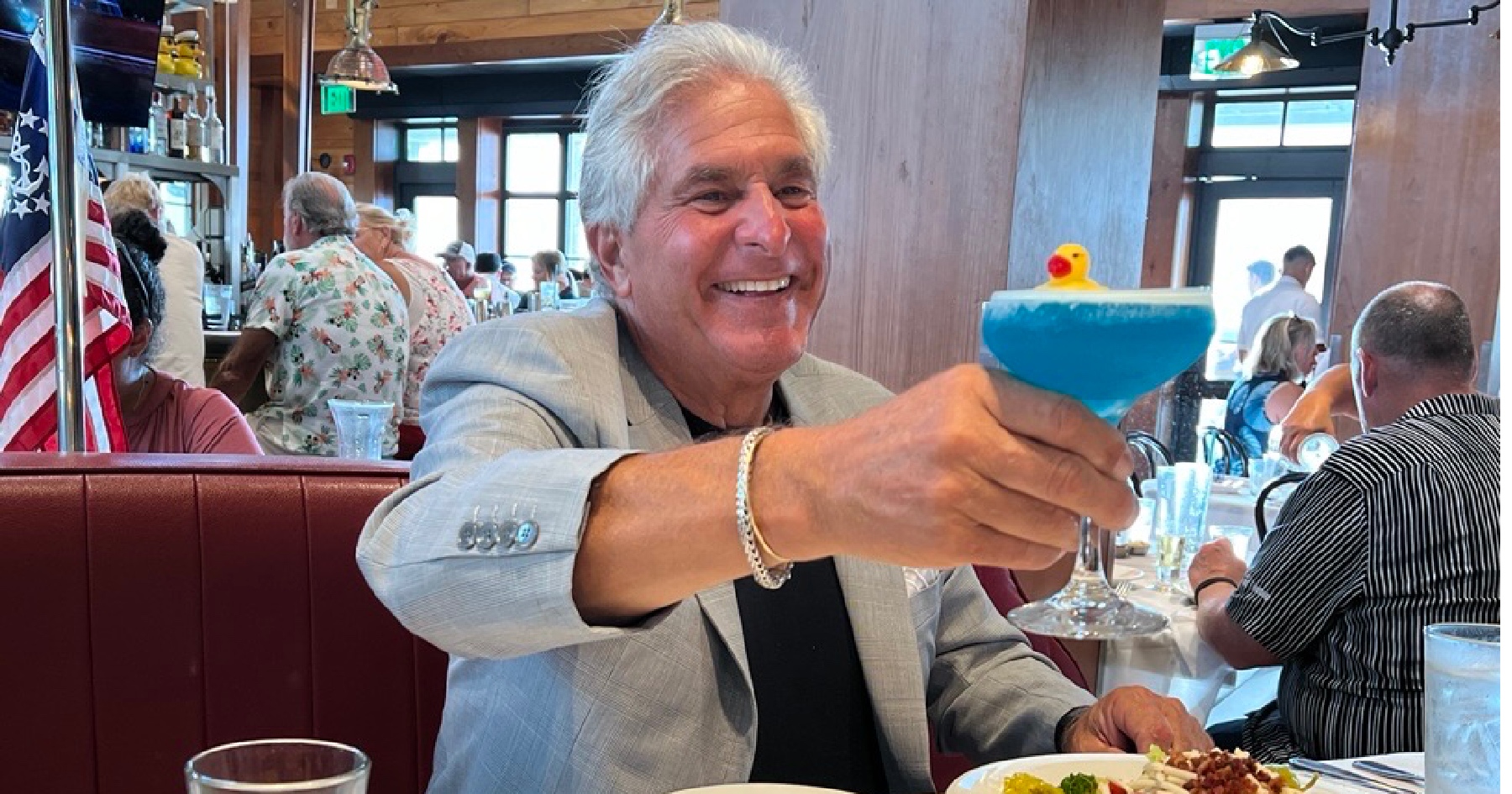
Steven Schussler keeps an eye on big and small details at The Boathouse. | Photo by Lisa Jennings.
And then there are the desserts.
Brad Warner, The Boathouse’s executive chef, said the restaurant expects to sell about 60,000 desserts this year, which he acknowledges is “insane” given one slice of key lime pie weighs more than a pound and serves six people.
(In fact, the 21-layer chocolate cake, at $26 per slice, is so big and showy, when a slice is served, it’s like a virus that spreads around the room. “I’ll have one of those,” can immediately be heard.)
The kitchen alone is 5,000-square-feet, but still not big enough. There are usually about 500 employees staffing the operation (including the Amphicars and retail side), with about 30 front-of-house and 25 back-of-house managers/supervisors, 115 hourly line cooks, dishwashers and other staff, and 325 servers/hosts/bussers/polishers.
The Boathouse’s menu was developed by the Gibsons group, a familiar name on the Top 100 list. Known for its Chicago-area steakhouses and concepts like Hugo’s Frog Bar & Fish House, Quartino Ristorante and Luxbar, Gibsons Restaurant Group has eight concepts on the Top 100 list this year—including The Boathouse, which ranks the highest.
“Gibsons is, by far, the best I’ve ever seen, used or partnered with in the world,” said Schussler. “People may come once for that wow factor. They come once because we’ve built this beautiful place, we have the Amphicars, we have this beautiful décor. But they come back for the great food and great service.”
When Schussler first pitched The Boathouse to Disney executives more than 10 years ago, he was initially told “no,” he said. Disney Springs already had a Rainforest Café, T-REX and Yak & Yeti. And, even though Schussler sold those concepts, he still considers them “his.” (Although Schussler is still mad that the new owners took the live birds out of Rainforest Café.)
Schussler, however, is a man who believes the word “no” is “yes” waiting to happen. That’s literally a chapter in his book, “It’s a Jungle in There.”
So he offered to build an architectural model of the Boathouse concept in about 1,000-square feet in the Disney offices, so people would walk by it every day. “I told them, I bet you after one week, people will say you’re crazy not to do that.”
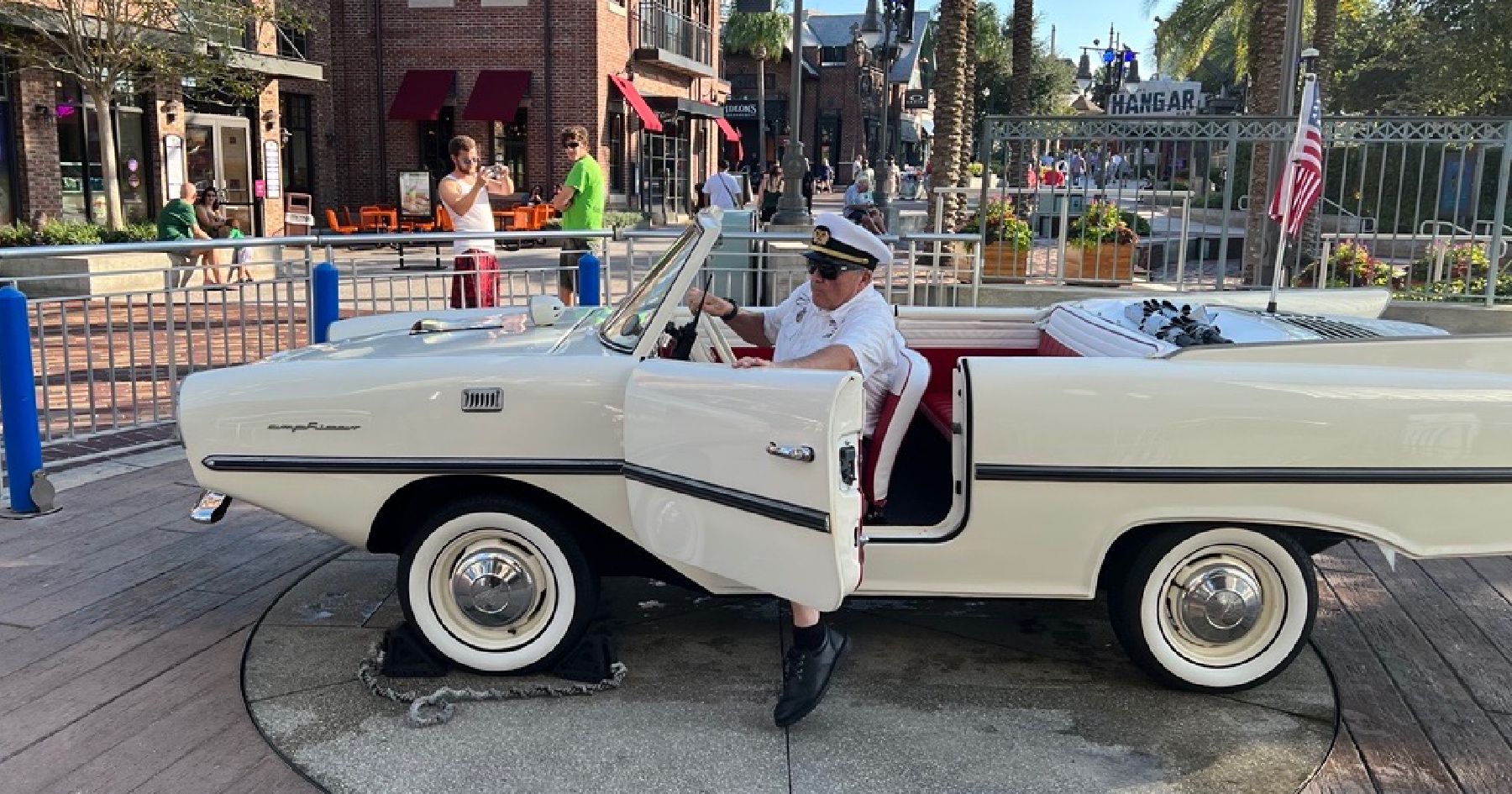
The Boathouse's Amphicars drive down a dock right onto the water for a spin around the lake. | Photo by Lisa Jennings
Disney also initially said no to the Amphicars. But Schussler restored the charmingly retro vehicles (built in the 1960s) anyway and brought two to Disney Springs’ Lake Buena Vista, putting them in the water (without permission).
How did the Disney executives react? “Let me tell you, it wasn’t happy birthday,” he said.
But those Disney executives paid attention when a crowd gathered along the shore to take pictures and ask for rides. Now, The Boathouse averages about 85 to 100 rides a day.
It’s all part of creating an experience, which, to Schussler, is as much about the smallest touchpoints (tiny cocktail ducks) as it is the big-swing theatrics.
People in the restaurant industry often say, “Don’t sweat the small stuff.” Schussler thinks that’s, well, duck guano.
To him, the small details add up to a lasting impression. He is a self-professed “lightbulb nut,” who can spot a burnt-out bulb 100 yards away.
“I’m not an expert in anything, but I see things no one else sees,” he said.
At his lab in Minnesota, he continues to develop new restaurant concepts, each with its own story.
There’s Aerobleu, based on an imaginary character from France who won a DC-3 plane in poker game and travels the world listening to jazz. That restaurant will be lit by almost 100 juke boxes, if Schussler has his way, and will have certain comic touches (urinals shaped like saxophones and toilets shaped like tubas).
There’s the Asian concept Zi, for which Schussler has collected some $40 million worth of Chinese artifacts from the Qing Dynasty. “We’ve been working on that one for 25 years,” he said.
And Winter Wonderland, where it’s Christmas year-round, has trains, trees that are syrup dispensers and snow that falls indoors but dissipates before it hits the floor.
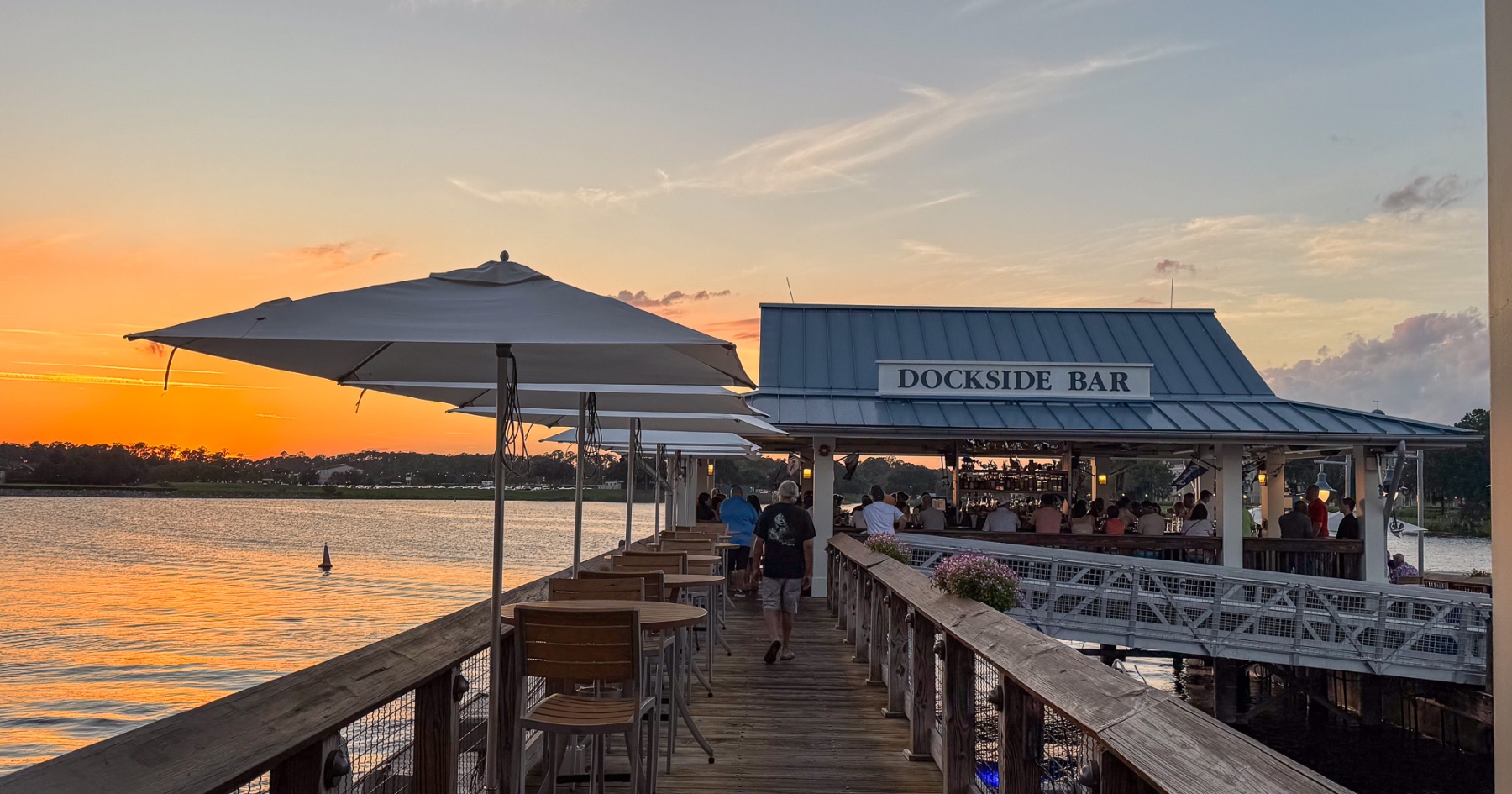
Nature provides one of the best experiences at the dock side bar. | Photo by Hailey Williams.
Perhaps, he said, there could be another location for The Boathouse—with the right real estate, he said.
Schussler, who is up front about the fact that he asks landlords for a considerable contribution, said there would have to be a certain volume of foot traffic, along with room for retail. And water, of course.
There are deals in the works, but he can’t reveal details just yet.
“For me, it’s not about the money,” said Schussler, who makes the statement with believable conviction. “It’s about putting smiles on people’s faces.”