It could be considered a reverse British invasion.
U.S.-based restaurant chains are seemingly flooding the United Kingdom this year and next, particularly fast-casual chicken brands.
Dave’s Hot Chicken is planning 60 units across the U.K., as its first entry into Europe with franchisee The Azzurri Group. Raising Cane’s plans to open its first unit in London next year, along with a London Support Office to drive company-owned growth there. Chick-fil-A opened its first location in Leeds in October with plans for a $100 million investment across the U.K. And Domino’s is developing a chicken sub-brand there called Chick ‘N’ Dip.
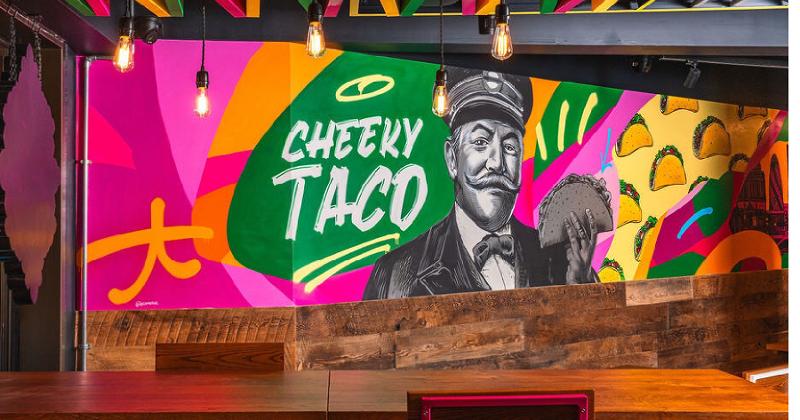
Meanwhile, last week Velvet Taco opened its first international location in London, with offerings like the Spicy Tikka Chicken Taco and Fish n’ Chips Taco.
The quick-service concept Captain D’s opened its first-ever flagship unit in Broadstairs, England, earlier this month, the first of 20 planned across the U.K.
Carl’s Jr. master franchisee Boparan Restaurant Group opened its first U.K. location of that burger brand in April, with plans to also bring it to Ireland.
The family entertainment brand Chuck E. Cheese in September announced a multi-unit deal to debut in the U.K., which will be the chain’s first move into Europe.
And, in an interview with Restaurant Business this week, P.F. Chang’s CEO Jim Mazany said he was in the U.K. recently and was impressed by the sophistication of diners there.
“In London, as a market, a brand like P.F. Chang’s could have a dozen [locations], and in the U.K., you could have 30 or 40,” he said. “I think it’s a market that, for the brand, I think it could do real well. And a lot of brands have been very successful there.”
What explains the mad rush across the Atlantic?
Foodservice consultant James Hacon, founder and managing partner of Think Hospitality said there are the more obvious reasons, like the shared language and the fact that the U.K. is a natural launch point for Europe more broadly.
The U.K. also has a franchising system framework, while other European population centers, like Germany, for example, do not.
Hacon, however, also notes that the restaurant industry in the U.K. is fairly turbulent. The restaurant industry there is facing challenges similar to the U.S.
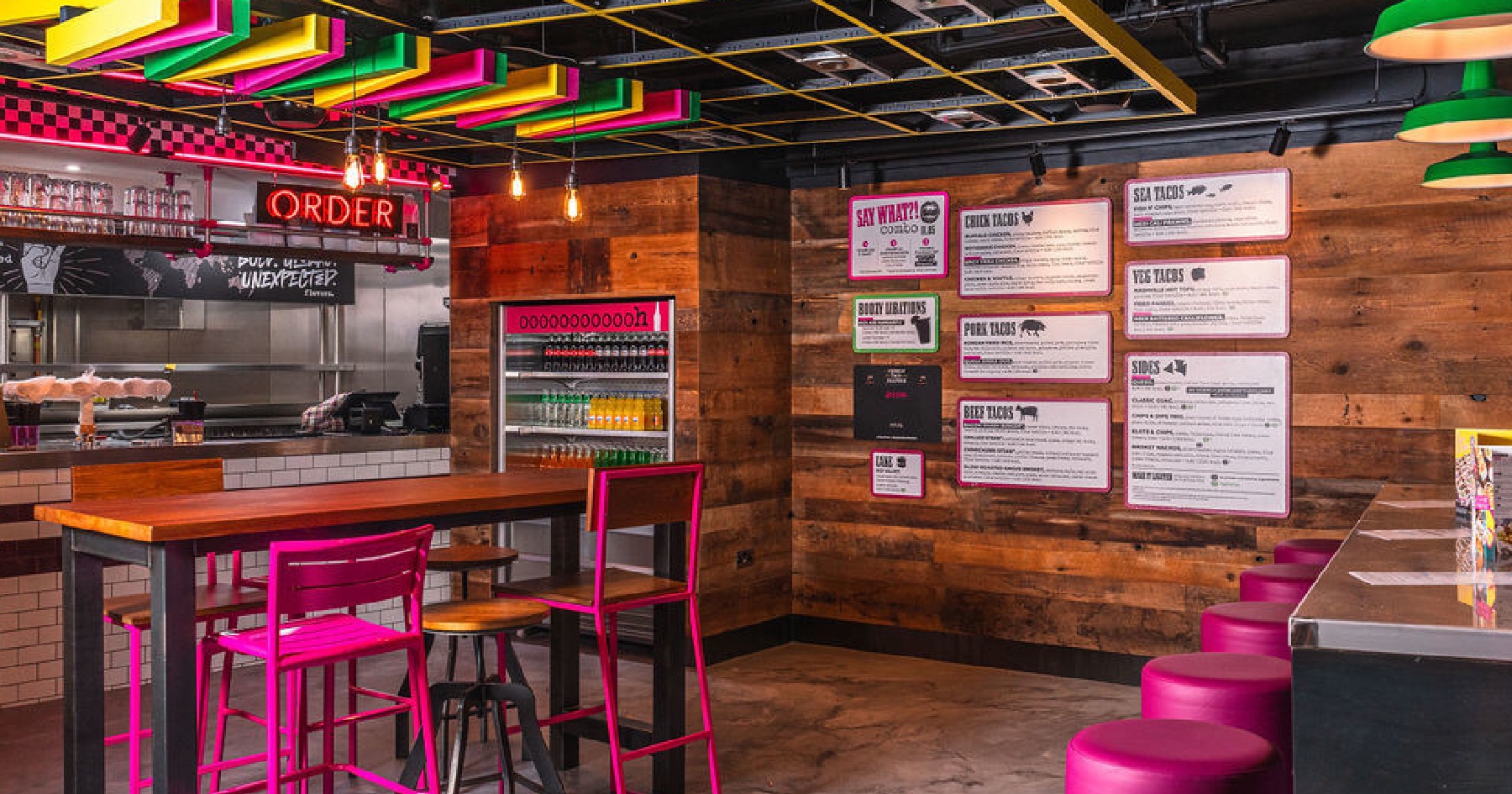
The interior of Velvet Taco's first location in the U.K. | Photo courtesy of Velvet Taco.
Consumers in the U.K. are struggling with rising inflation and economic concerns. They’re eating more at home and cutting back on spending, and that’s why fast-casual and quick-service concepts are on the rise there, as more diners trade down from casual dining, Hacon said.
Casual dining, once a strength across the U.K., crashed in 2018 and never really recovered, only to be hit after that by COVID-19, he said.
The result has been a roughly 20% decline in restaurant units over the past 16 years.
The upside, however, is that prime real estate has become more widely available.
“Real estate now is much easier than it has ever been in terms of seeing opportunities coming up for prime real estate that you wouldn’t have expected,” said Hacon. Think Hospitality often works with malls that are shifting retail into restaurant spaces, for example, which also creates opportunities for growing brands, Hacon said.
Restaurant operators in the U.S. are also likely seeing the success of brands like Five Guys, this year’s Global Restaurant Leader of the Year by Restaurant Business, a chain with more than $1 billion in sales internationally today.
Five Guys opened its first location outside North America in London’s Covent Garden in 2013 in a joint venture with telecom billionaire Sir Charles Dunstone, who reportedly fell in love with the brand while visiting the U.S. on holiday.
Five Guys Europe now includes about 300 units, including France, Germany and Spain, with 177 in the U.K.
Dunstone is reportedly seeking investors to acquire up to 50% stake in Five Guys Europe, which is estimated to be valued at about $767 million, according to Sky News.
That move could be motivated in part by the fact that investors are hungry for American brands expanding in the U.K., Hacon speculated, particularly after seeing Wingstop become one of the fastest-growing restaurant brands there more recently.
In December, the U.S.-based private equity firm Sixth Street acquired Lemon Pepper Holdings, Wingstop’s master franchisee for the U.K. and Ireland in a transaction valued at more than $503 million at the time.
After first opening in the U.K. in 2018, the Dallas-based fast-casual brand ended 2024 with 57 locations in the region and a target of reaching 200 in five years.
“As soon as that Wingstop valuation went out, we got inundated by U.S. brands, some I’d never heard of, coming to the U.K.,” Hacon said.
Popeyes is another brand often cited for its success in the U.K. The quick-service chain on Tuesday opened its 100th unit there, at London Bridge station. Private-equity firm TDR Capital acquired a majority stake in Popeyes UK, which also operates the chicken brand in France, in January 2024 after first investing in the business in 2023.
View this post on Instagram
Seeing that success did motivate Dave’s Hot Chicken to jump the pond, said Jim Bitticks, Dave’s president
Dave’s was approached by the U.K.-based franchise operator, The Azzurri Group, seeing a huge opportunity for the hot chicken brand. The group opened its first location in December, and this week will reach six units, with a seventh coming next month.
Another five are planned for 2026 before the group looks at taking the brand into the rest of Western Europe, Bitticks said.
Peter Backman, who writes about the U.K.’s foodservice industry, said chicken has become increasingly popular because it’s fairly cheaply available, which has created a flywheel effect.
It’s a phenomenon that hasn’t been missed by master franchisee Domino’s Pizza Group, which is preparing to launch the new Chick ‘N’ Dip concept in the U.K.
The group operates roughly 1,400 pizza outlets in the U.K., but Chick ‘N’ Dip is a sub brand featuring wings and baked chicken tenders “coated in a bespoke crumb,” according to a press release, and paired with the option of about 12 dips, like Mexican Mayo, Katsu Curry or (“for a taste of the States”) Buffalo Hot Sauce. A similar concept by KFC debuted in the U.S. last year.
That’s not to say a move to London for any U.S. brand is a sure thing, notes Backman.
Brands like Chipotle, Wendy’s and TGI Fridays have struggled to get traction in the U.K. As executives shared at the Global Restaurant Leadership Conference in Barcelona last week, it can take time for a brand to get established.
Chick-fil-A attempted a popup in London in 2019 that sparked protests related to an owner's stance on same-sex marriage at the time.
But, in August, Chick-fil-A announced plans to open the chain’s first permanent restaurants in Great Britain, starting in Leeds, in partnership with local owner-operator Mike Hoy, who was raised in London, the chain noted. The first unit opened in October.
View this post on Instagram
Chick-fil-A plans to invest more than $100 million in the U.K. over the next decade (along with a $75 million investment in Singapore).
Indeed, Backman noted that consumers across the U.K. have expressed some anti-U.S. sentiment—or at least they are “less pro-U.S. than usual."
But given the appetite for American restaurant brands of late, he said, “I doubt if it’s sufficient to [have an] impact.”